Housie on the screen
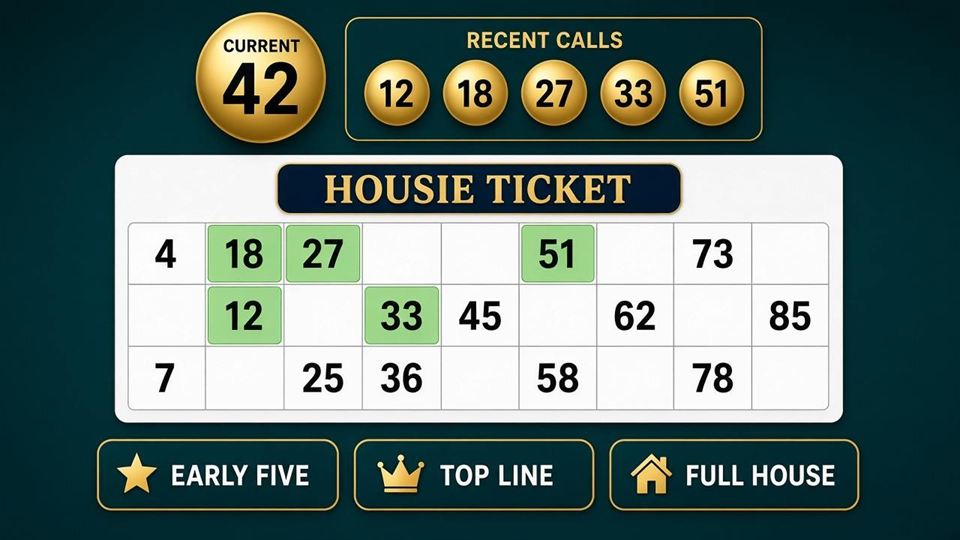
How to download and install Housie
Use the button on this page to download Housie. The install file is an Android APK of 34MB, version 1.1.6.
Download Housie
Tap the button on this page. It opens the address where the APK is.
Save the Housie APK
Wait until the phone has finished saving the APK, then open that file.
Allow the Housie install
If the phone asks about an unknown source, allow this install once, following the system prompt.
Open the Housie app
When the install finishes, open the app from the home screen, then register an account as the next section says.
How to register for Housie
Open registration for Housie
After you open the app, tap Register. Do not submit the form twice.
Enter your mobile number for Housie
Use your own mobile number to receive the code, then set a login password.
Check the account, then open Housie
Check that the account is open, then choose the game you want to play.
How to log in to Housie
Log in to Housie with your mobile number
If you already have an account, tap Log in. Enter the mobile number and password you used when you registered.
If you forget the Housie password
Tap Forgot password. Use the same mobile number to receive a code, then set a new password. Do not submit it twice.
Housie details
| Game | Housie |
|---|---|
| Category | Casual |
| Version | 1.1.6 |
| APK size | 34MB |
| System | Android |
| Language | English and Hindi. You switch them inside the app. |
| Age | 18+ |
| Price | Housie is free to download |
What Housie is like
- The ticket is 3 rows and 9 columns, with fifteen numbers and twelve blanks. Each row has five numbers.
- The columns follow fixed ranges: 1–9 and 10–19 from the left, through to 80–90 in the last column.
- Numbers are called from 1 to 90, and each number is called only once.
- If the ticket has that number, mark it at once.
- This table opens patterns. Early Five, the top, middle, and bottom lines, the four corners, and Full House are the usual ones.
- When a pattern is complete, claim it before the next ball is called. It counts only after it is checked.
Why play Housie
For players who like watching the ticket, hearing the ball, and going for a line claim, Housie may be a good fit. You check the ticket as soon as a ball is called, and you claim when a pattern is complete. The pace is clear.
After you join a table, see which patterns this table has opened. Mark the numbers accurately, and claim before the next ball.
How to play Housie
-
Learn the ticket first
When you join this table, look at your own ticket first: three rows, nine columns, and fifteen numbers. Do not mark numbers yet.
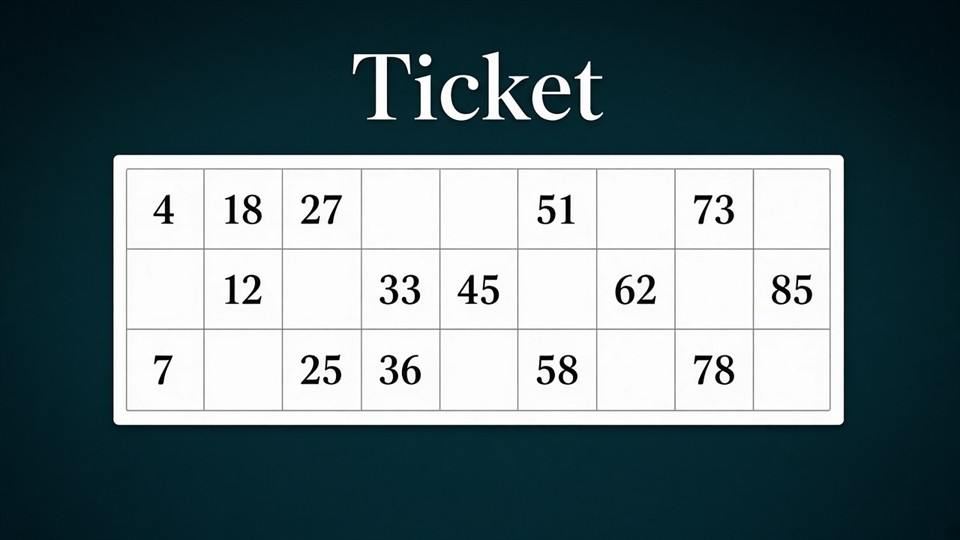
Learn your own ticket first. -
See which patterns this table has opened
Before the round starts, read the patterns listed on this table, such as Early Five, Top Line, and Full House. Do not claim a pattern this table has not opened.
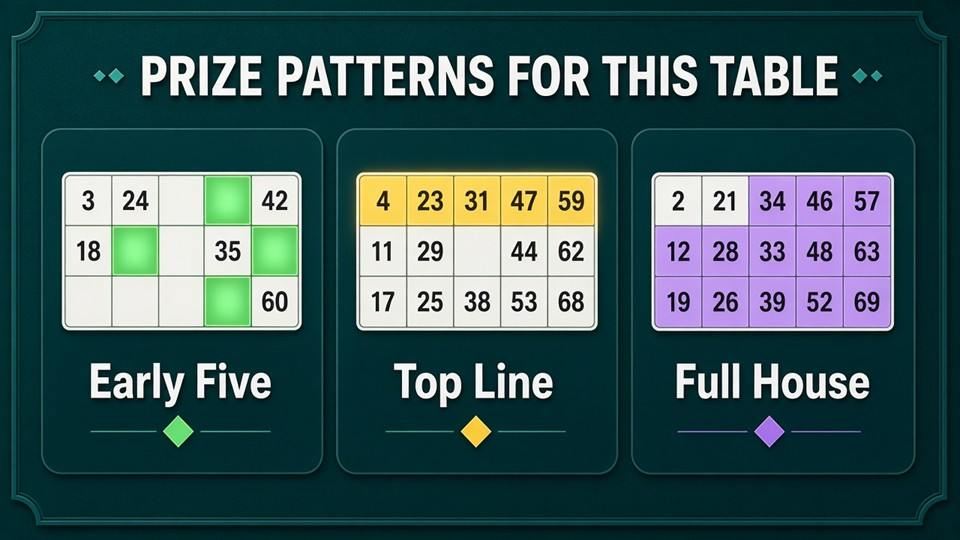
The patterns this table has opened -
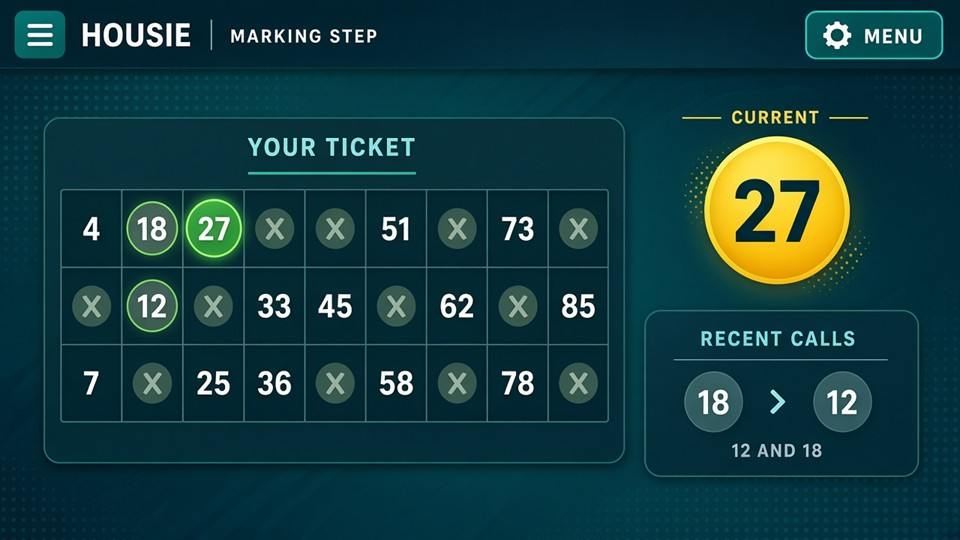
A ball is called. Mark the number
When a number is called, mark it at once if it is on the ticket. Each number is called only once. A missed number does not come back.
Mark it if you have it. -
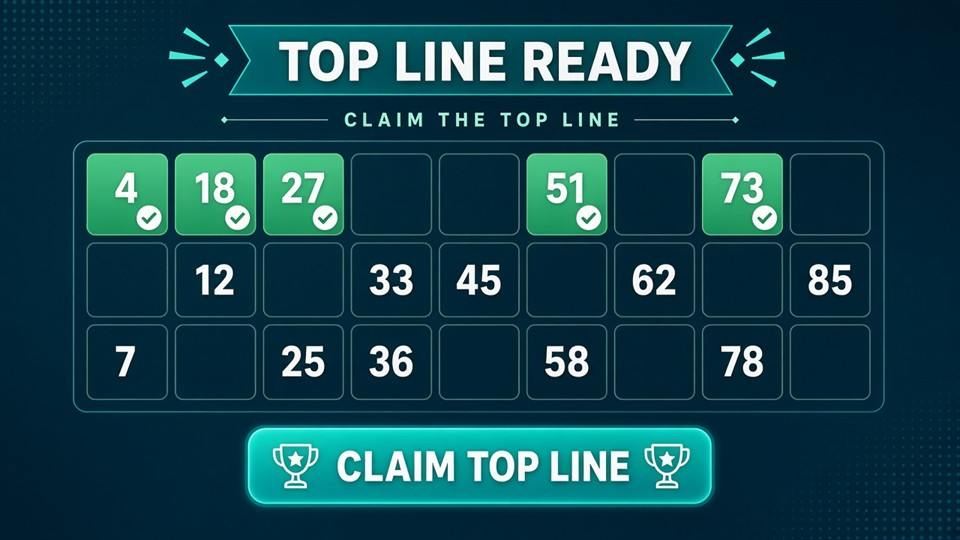
Claim when a pattern is complete
When a pattern this table has opened is complete, tap claim before the next ball is called. It counts only after the system or the caller checks it.
Claim as soon as it is complete. -
The round ends after Full House
Once a Full House, all fifteen numbers complete, is claimed and checked, the round usually closes. Whether there is a second Full House is on this table.
Playing Housie well
What to do
- Check the ticket as soon as a ball is called. Each number is called only once, and a missed mark is not filled in later.
Mark the number at once. - Remember which patterns this table has opened. Do not chase a line this table has not opened.
Go for what this table has opened. - Claim as soon as a pattern is complete. If you tap after the next ball is called, it usually does not count.
Tap as soon as it is complete. - When you hold several tickets, watch the row that is nearly complete first, then scan the other cells.
What not to do
- Marking a number that has not been called. You can mark only a number that has been called.
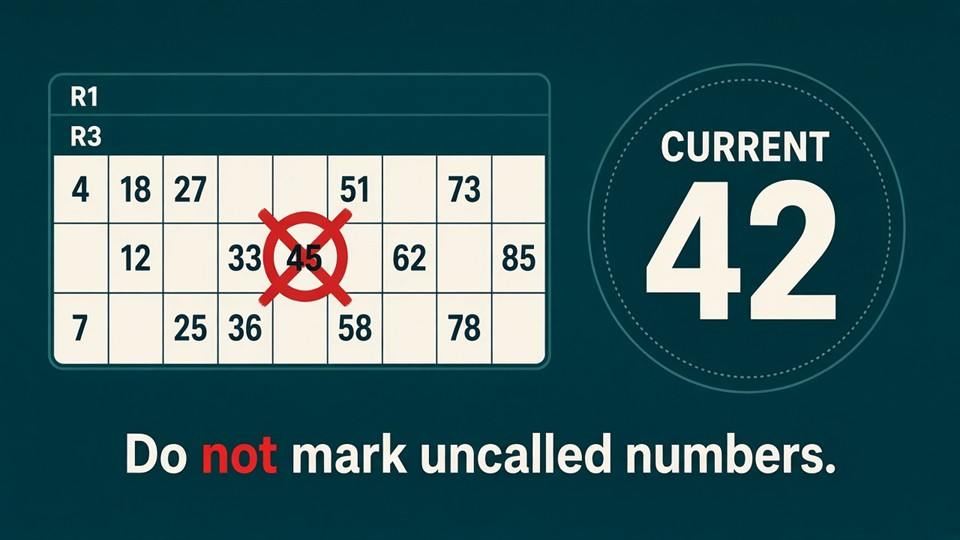
Do not mark a number that has not been called. - Claiming only after the next ball has already been called. A claim has to be in before the next ball.
- Claiming a pattern this table has not opened. Claim only the patterns listed on this table.
- Missing a number that is already on the ticket. Each number is called only once. If you miss it, it is gone.
- A false claim. If you tap before the pattern is complete, the check fails, and this table may deal with it in its own way.
Rules of Housie
- The ticket
-
- One ticket is 3 rows and 9 columns.
- There are fifteen numbers and twelve blanks in all.
- Each row has exactly five numbers.
- The numbers in each column fall in a fixed range: 1–9, 10–19, through to 80–90.
- The call
-
- Numbers are called from 1 to 90.
- The same number is called only once in this round.
- You can mark a number only if it is on the ticket.
- Patterns
-
- Before the round starts, the table shows which patterns it will open.
- The usual ones are Early Five (any five), the top line, the middle line, the bottom line, the four corners, and Full House.
- Only the patterns this table has already opened can be claimed.
- A claim
-
- When a pattern is complete, claim it before the next ball is called.
- It is valid only if the marks on the ticket match the numbers already called.
- A claim made after the next ball has been called is usually not valid. The detail is on this table.
- The end
-
- After a Full House is claimed and checked, the round usually ends.
- Whether there is a second Full House is on this table.
- What does not count
-
- A number you mark before it is called is not a valid mark.
- A claim made before the pattern is complete is not a valid claim.
- You cannot claim a pattern this table has not opened.
- Each round stands alone
-
- The ticket and the marks from the last round are not carried into the next round.
- Patterns opened in the last round do not carry over. The next round follows the new table's notes.