
Ludo on the screen

How to download and install Ludo
Use the button on this page to download the Ludo game. The file is an Android package, 34MB, version 1.1.6.
Download Ludo
Tap the button on this page. It opens the address where the APK is.
Save the Ludo APK
Wait until the phone has finished saving the APK, then open that file.
Allow the Ludo install
If the phone asks about an unknown source, allow this install once, following the system prompt.
Open the Ludo app
When the install finishes, open the app from the home screen, then register an account as the next section says.
How to register for Ludo
Open registration for Ludo
After you open the app, tap Register. Do not submit the form twice.
Enter your mobile number for Ludo
Use your own mobile number to receive the code, then set a login password.
Check the account, then open Ludo
Check that the account is open, then choose the game you want to play.
How to log in to Ludo
Log in to Ludo with your mobile number
If you already have an account, tap Log in. Enter the mobile number and password you used when you registered.
If you forget the Ludo password
Tap Forgot password. Use the same mobile number to receive a code, then set a new password. Do not submit it twice.
Ludo details
| Game | Ludo |
|---|---|
| Category | Casual |
| Version | 1.1.6 |
| APK size | 34MB |
| System | Android |
| Language | English and Hindi. You switch them inside the app. |
| Age | 18+ |
| Price | Ludo is free to download |
What Ludo is like
- There are four colours, and each player moves their own colour. Pieces leave their own yard, follow the track, and enter their own home column.
- You roll only when it is your turn. The number you roll is how many squares that move can take.
- A piece in the yard has to take off before it can join the track. Often you need a 6 to bring it out. Whether this table works that way is in the notes when you enter the room.
- If you land on an opponent's square and it is not a safe square, you send that piece back to its yard. You cannot capture a piece that is on a safe square.
- You need an exact count to enter the home column. You cannot split off the extra, so that move cannot go in.
- When more than one piece can move on the same roll, you choose one of them.
Why play Ludo
For players who like to roll for themselves, then choose which piece moves forward, Ludo may be a good fit. The colours sit apart on the board. On your turn you look at the die, then tap one piece.
You can stop on a safe square. When you want to block someone, you can also land on their square and send that piece back to its yard. When someone first meets the condition written on this table, the round stops.
How to play Ludo
-
Look at this table first
When you enter the room, first see how many people are playing, how many pieces each person has, and what counts as a win. How much to put down is on this table. This page does not state that figure.
-
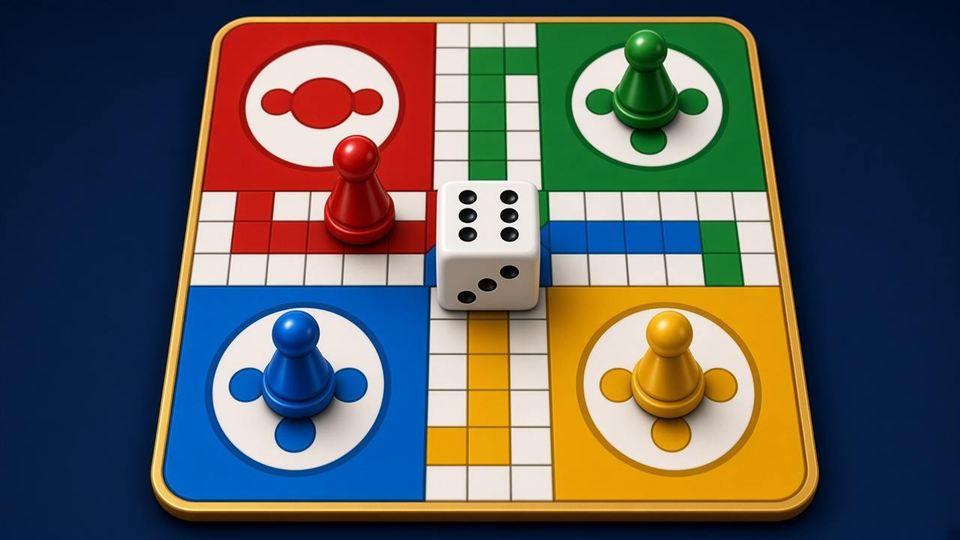
Roll, then take off
Roll when it is your turn. A piece in the yard has to join the track first. Often you need a 6 to bring it out. Whether this table works that way is in the notes at the start.
Taking off -
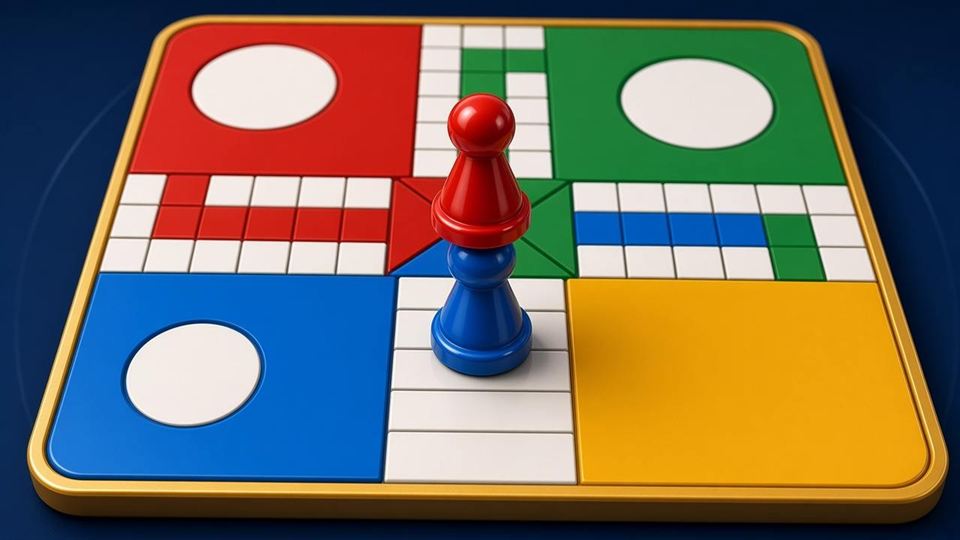
Choose one piece
If more than one piece can move, tap one. If you land on an opponent's square and it is not a safe square, you send that piece back to its yard. A piece on a safe square stays where it is.
A capture -
Enter on an exact count
Only the column in your own colour leads into the home. If you are a few squares short, you need to roll that exact number. You cannot split off the extra.

An exact count -
Stop when this table is done
When someone first meets the condition written on this table, the round ends. Often that means sending all of your own pieces into the home column. If the table shows something else, follow the notes on the table.
Playing Ludo well
What to do
- Leave one piece on a safe square first. If someone is behind you, do not leave it just to gain one extra square.

Stop here first - When you are close to the home column, keep a piece that can enter on an exact count. Do not go out of your way to capture a piece that is already far behind.
What not to do
- Do not pull every piece out of the yard at once just because you can take off. Once they are spread out, each piece is easy to send back.
- Do not leave a safe square to chase a piece that is already far behind. The piece of yours that is closer to the home column stops moving.
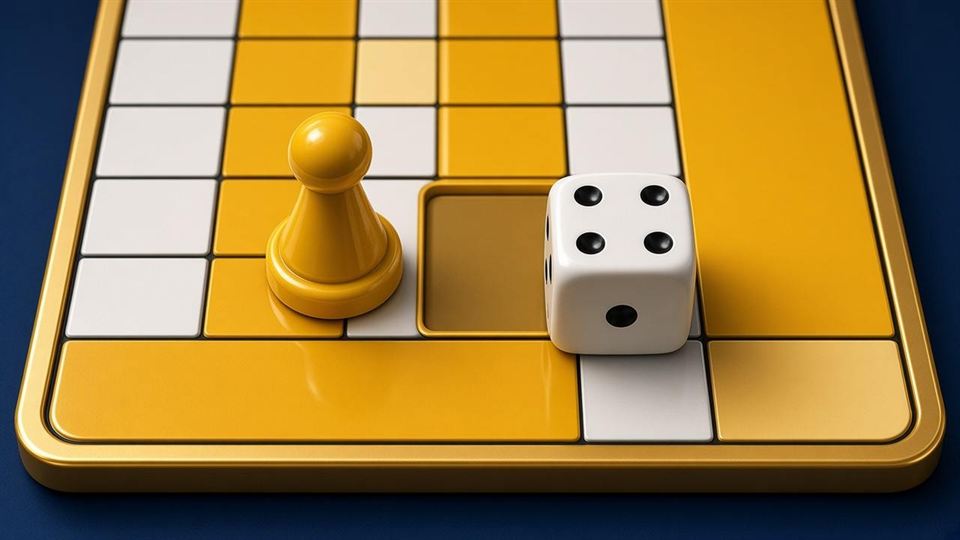
- Do not force the move when the count is past the home column. If that step cannot go in, this piece does not move.
It cannot enter
Rules of Ludo
- The start
-
- Each player has one colour.
- Pieces start in their own yard.
- How many people play, and how many pieces each person has, is written on the table. This page does not state those figures.
- The roll
-
- You roll only when it is your turn.
- The number you roll is how many squares that move can take.
- When more than one piece can move, you choose one.
- If no piece can take this move, the turn passes.
- Taking off
-
- A piece in the yard has to enter the track first.
- Often you need a 6 to take off.
- Whether this table works that way is in the notes when you enter the room.
- Whether a 6 lets you roll again is also written on the table. This page does not state it.
- Whether several 6s in a row are cancelled is written on the table. This page does not state it.
- A capture
-
- If you land on the square an opponent occupies, and it is not a safe square, that piece goes back to its yard.
- A piece on a safe square cannot be captured.
- What a safe square looks like is on the board.
- Whether you may roll again after a capture is written on the table. This page does not state it.
- The home column
-
- Only the column in your own colour can be entered.
- You cannot walk into a home column of another colour.
- You need an exact count to enter the home column.
- If the count is too high and you cannot split it, that move cannot go in.
- Who wins
-
- Whoever first meets the condition written on this table wins the round.
- Often that means sending all of your own pieces into the home column.
- If this table only compares who sends one piece in first, follow the notes on the table.
- The stake
-
- This page does not state how much to put down at this table.
- Check the table before you sit down.