DD1 on the screen
How to download and install DD1
Use the button on this page to download the DD1 game. The file is an Android package, 34MB, version 1.1.6.
Download DD1
Tap the button on this page. It opens the address where the APK is.
Save the DD1 APK
Wait until the phone has finished saving the APK, then open that file.
Allow the DD1 install
If the phone asks about an unknown source, allow this install once, following the system prompt.
Open the DD1 app
When the install finishes, open the app from the home screen, then register an account as the next section says.
How to register for DD1
Open registration for DD1
After you open the app, tap Register. Do not submit the form twice.
Enter your mobile number for DD1
Use your own mobile number to receive the code, then set a login password.
Check the account, then open DD1
Check that the account is open, then choose the game you want to play.
How to log in to DD1
Log in to DD1 with your mobile number
If you already have an account, tap Log in. Enter the mobile number and password you used when you registered.
If you forget the DD1 password
Tap Forgot password. Use the same mobile number to receive a code, then set a new password. Do not submit it twice.
DD1 details
| Game | DD1 |
|---|---|
| Category | Card games |
| Version | 1.1.6 |
| APK size | 34MB |
| System | Android |
| Language | English and Hindi. You switch them inside the app. |
| Age | 18+ |
| Price | DD1 is free to download |
What DD1 is like
- Each person has three cards. What you compare is the hand those three make.
- The cards start face down. SEE turns your three cards up. CHAAL stays in for this turn. PACK leaves this round.
- You can stay in before you have seen the cards. After you have seen them, this turn usually costs more. How much more is shown on the table you join.
- The cards are usually shown only when two people are left. The higher hand wins the round.
Why play DD1
Three cards are enough to read, and a round does not sit for long. You can stay in while the cards are still face down, or turn them up and see the hand before you decide.
Once the cards are face up, the kind of hand is in front of you. Staying or leaving is then a look at those three cards, not a guess about a hidden one.
How to play DD1
-
Look at your own three cards
When you enter, look at the three cards in front of you. They start face down. The word DD1 under them is the name of this table, not a card.
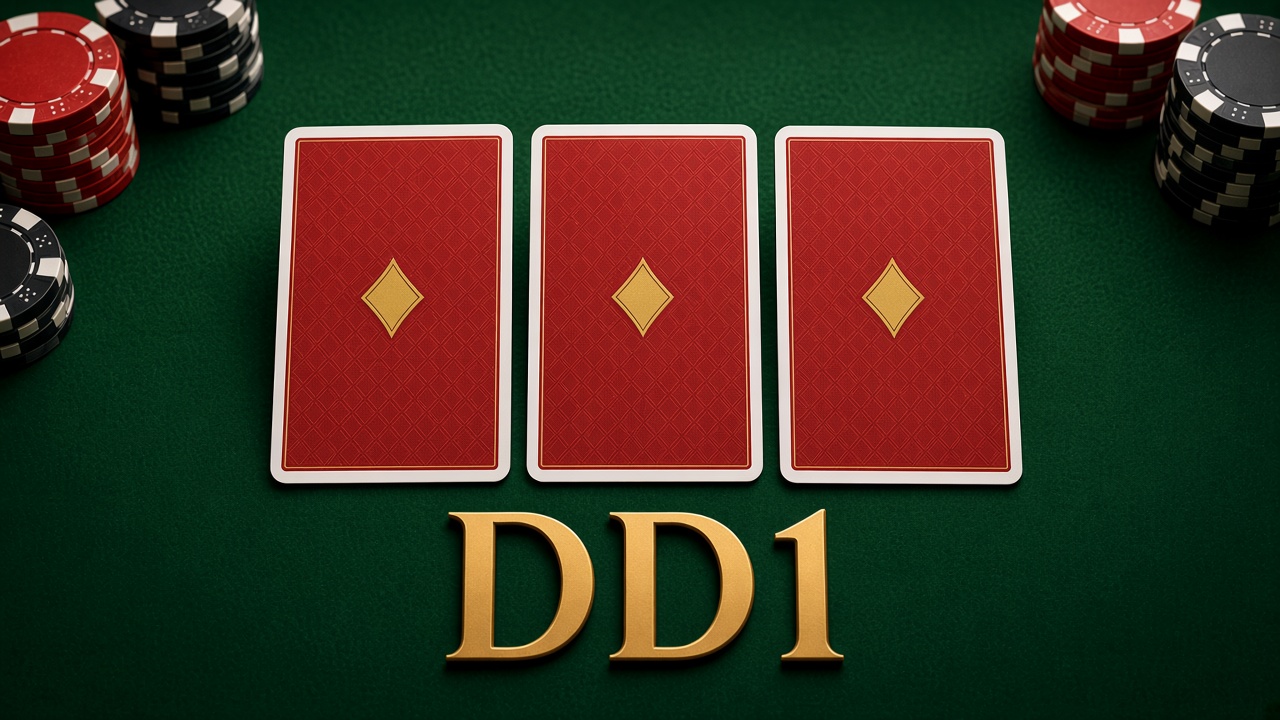
Face down at the start -
Turn the three cards up
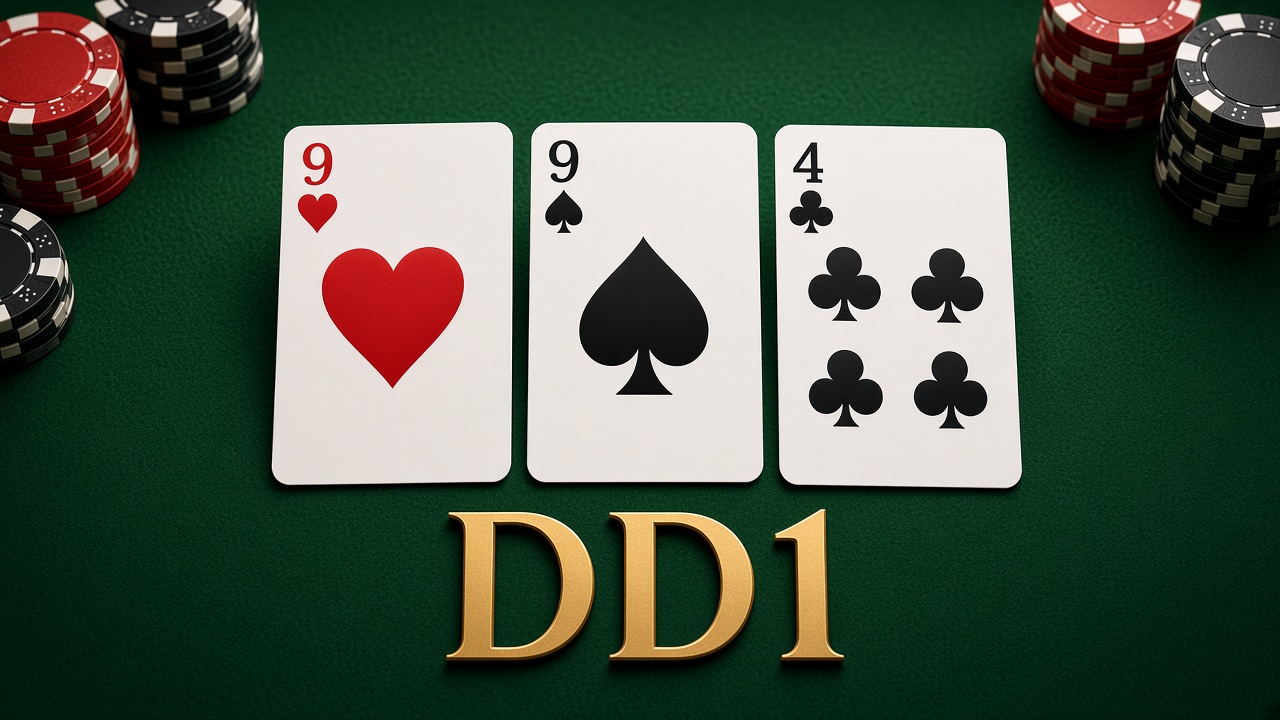
Tap SEE. The three cards turn face up: the 9 of hearts, the 9 of spades, and the 4 of clubs.
After you tap SEE -
Read this hand
Two cards of the same rank, and a third card of another rank, are a pair. The 9 of hearts and the 9 of spades are the pair. The 4 of clubs is the third card.
A pair of nines -
Stay in, or leave
On your turn the table shows SEE, CHAAL, and PACK. SEE turns your three cards up. CHAAL stays in for this turn. PACK leaves this round. Whether you raise, and how much this turn is, is shown on the table you join.
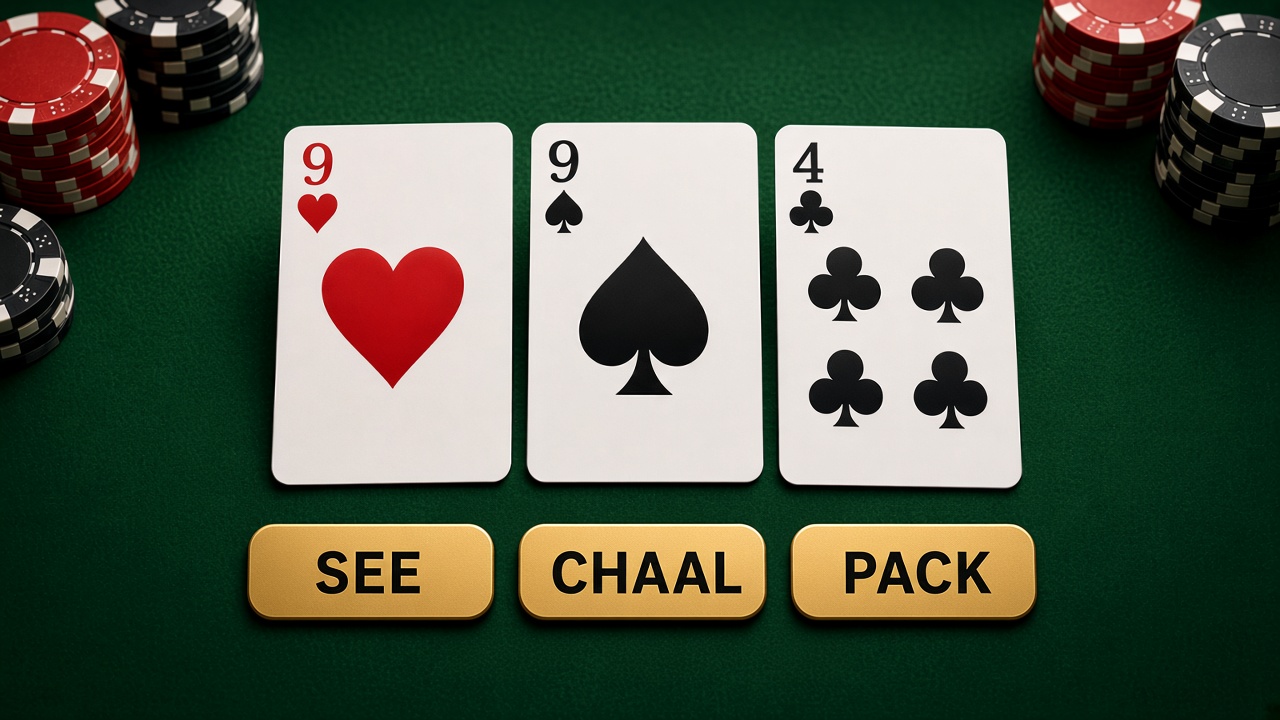
SEE, CHAAL, PACK -
Show the cards when two people remain
While more people are in, you usually do not show the cards. When only two people are left, the cards are shown. The top hand is the 9 of hearts, the 9 of spades, and the 4 of clubs, a pair. The hand below is the 8 of diamonds, the 3 of hearts, and the 2 of clubs, a high card. The pair is higher, so the top hand wins this round.
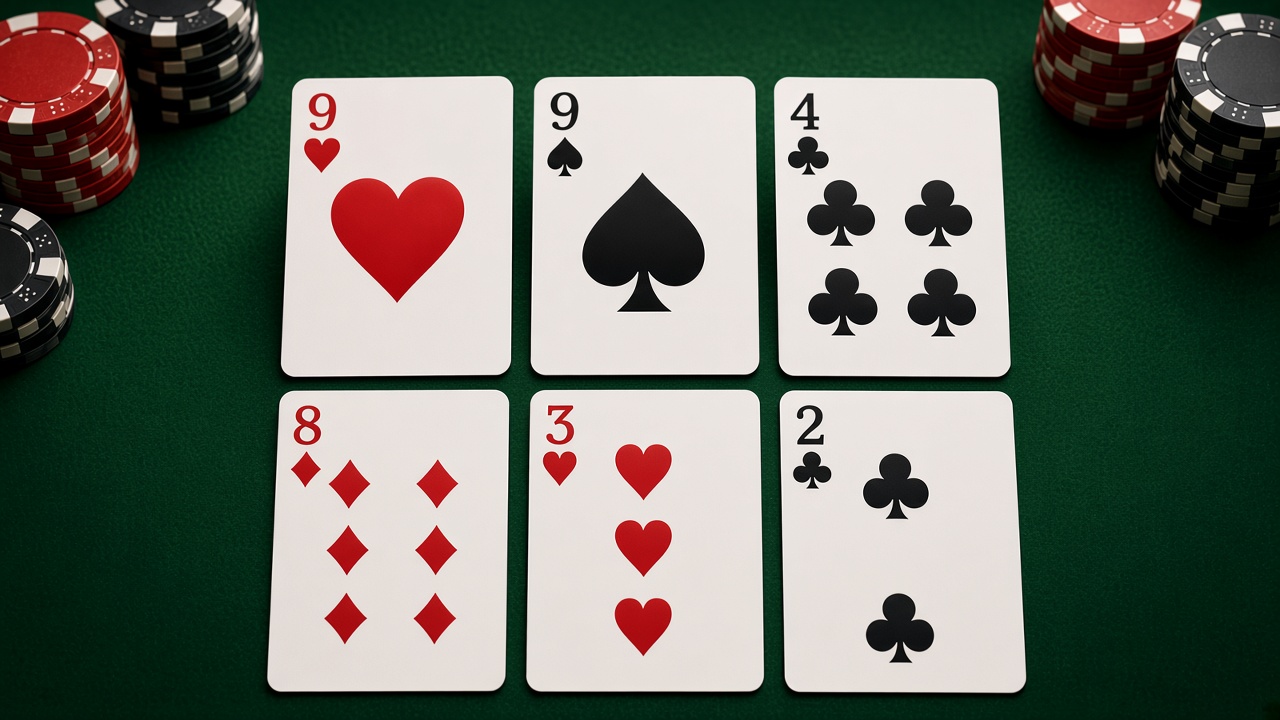
A pair of nines above a high card
Playing DD1 well
What to do
- Look at the three cards before you raise. They are still face down, so you do not know the hand yet.
The cards are still face down - Stay with CHAAL when the 9 of hearts and the 9 of spades are still in your hand. That is a pair, and the 4 of clubs is only the third card.
CHAAL keeps the pair in - Wait until two people are left, then show the cards. The pair of nines is on top. The 8 of diamonds, the 3 of hearts, and the 2 of clubs are below, and that high card is lower.
The pair is higher
What not to do
- Treating the word DD1 as a card. That word is the name of this table. The cards are the three above it.
The word is under the cards - Packing while the pair of nines is still in your hand. The 9 of hearts and the 9 of spades stay in the hand. PACK is the button with the cross, and those two nines are not thrown away.
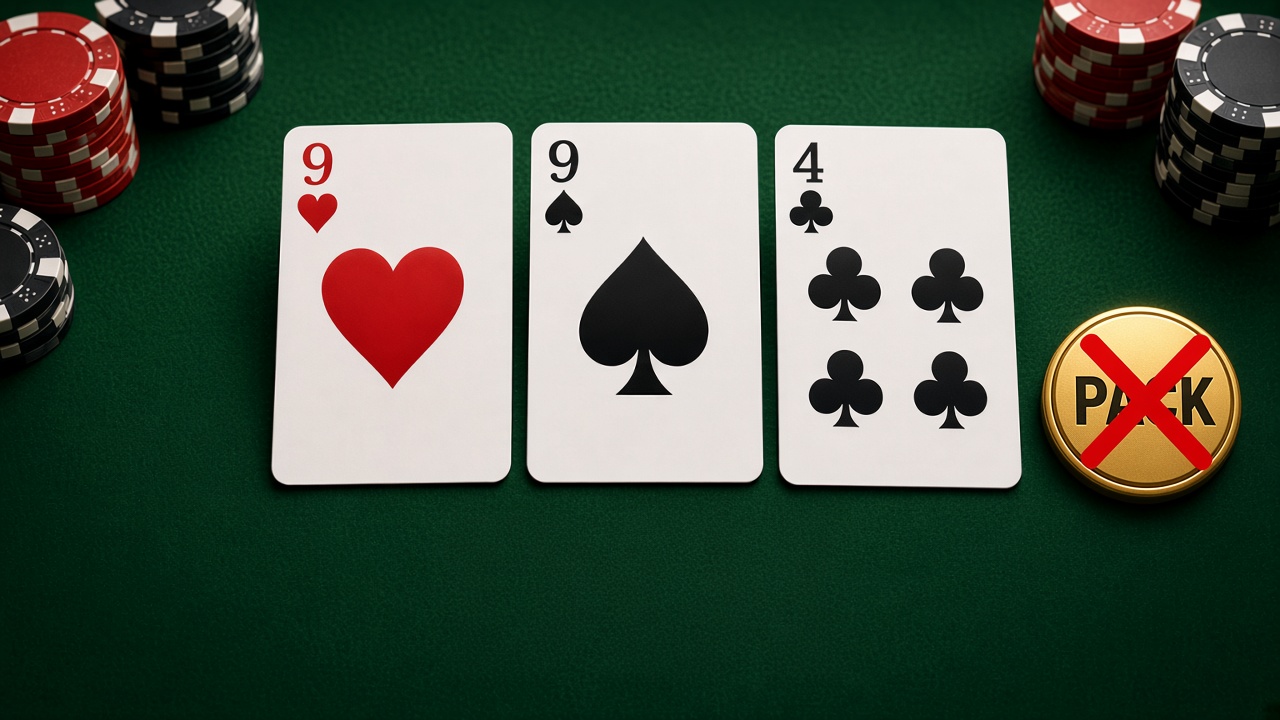
The pair stays in the hand - Asking to show the cards while more than two people are still in. The cards are usually shown only when two people remain.
- Tapping CHAAL only because chips are already on the table. A stake already put down stays on the table. That does not mean you still have to stay in this turn.
Rules of DD1
- Which cards
-
- Usually one pack, with no wild card.
- Three cards each.
- How many people are at a table is shown on the table when you enter.
- A different number of cards is another way of playing. This page does not go into it.
- The boot
-
- Some tables place a stake at the start. That stake is called the boot.
- Whether there is one, and how much is placed, is shown on the table you join.
- Blind and seen
-
- If you have not turned your three cards face up, that is playing blind.
- After you turn them up, that is playing seen.
- Someone who has seen the cards usually stakes more on this turn.
- How much higher is shown on the table you join.
- How a turn goes
-
- On your turn the table shows SEE, CHAAL, and PACK.
- SEE turns your own three cards up.
- CHAAL stays in for this turn. Whether you raise, and how much this turn is, is shown on the table you join.
- PACK leaves this round.
- A stake already put on the table stays on the table. It is not returned.
- Showing the cards
-
- Usually the cards are shown only when two people are left.
- After they are shown, the higher hand wins the round.
- Whether you can show the cards while more people are in, and whether another stake is needed, is in the notes on the table you join.
- Three of a kind
-
- Three cards of the same rank.
- In the usual hands, three of a kind is the highest.
- Pure sequence
-
- Three cards of the same suit, in sequence.
- In the usual hands, it ranks after three of a kind.
- Sequence
-
- Three cards in sequence. The suits do not have to match.
- A sequence here is only for comparing these three cards with another three.
- The ace can run as ace, 2, 3, and it can also run as queen, king, ace.
- It cannot run as king, ace, 2.
- Whether this table counts ace, 2, 3 is on the hand table of the table you join.
- Colour
-
- Three cards of the same suit, not in sequence.
- In the usual hands, it ranks after a sequence.
- Pair
-
- Two cards of the same rank, and a third card of a different rank.
- When both hands are pairs, compare the rank of the pair first, then the third card.
- High card
-
- Three cards that are not three of a kind, a sequence, a colour, or a pair.
- When you compare, start from the highest card and go down.
- Order of the hands
-
- The usual order is three of a kind, pure sequence, sequence, colour, pair, and high card.
- Some tables change this order.
- When you enter, look at the hand table on this table.
- The same hand
-
- If the hands are the same, then compare the ranks.
- If the ranks are the same as well, how this round is split is shown on the table you join.
- Other ways of playing
-
- Muflis and Joker are other ways of playing. This page does not go into them.