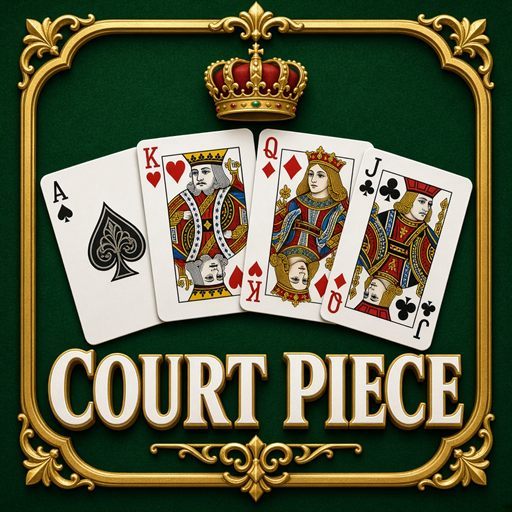
Court Piece on the screen
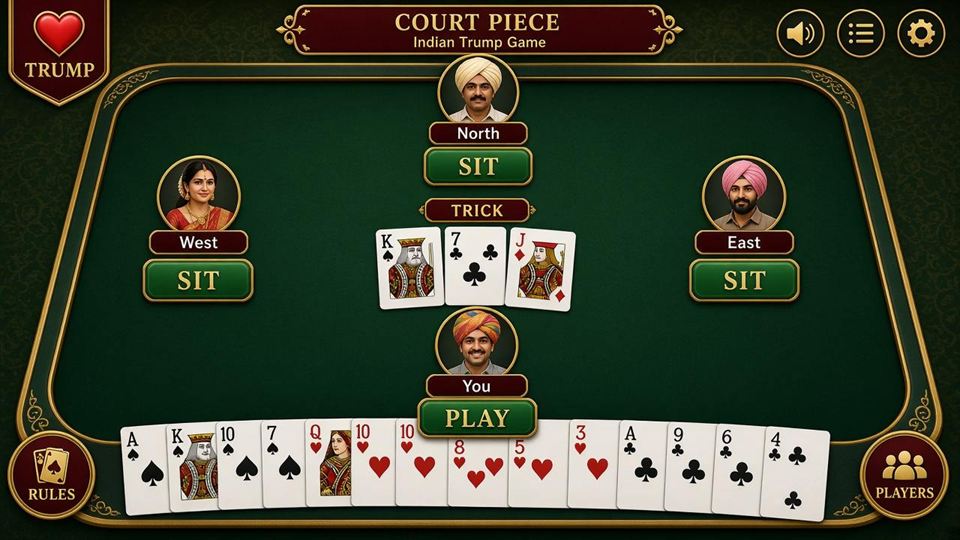
How to download and install Court Piece
Download Court Piece from the button on this page. The file is an Android APK, 34MB, version 1.1.6.
Download Court Piece
Tap the button on this page. It opens the address where the APK is.
Save the Court Piece APK
Wait until the phone has finished saving the APK, then open that file.
Allow the Court Piece install
If the phone asks about an unknown source, allow this install once, following the system prompt.
Open the Court Piece app
When the install finishes, open the app from the home screen, then register an account as the next section says.
How to register for Court Piece
Open registration for Court Piece
After you open the app, tap Register. Do not submit the form twice.
Enter your mobile number for Court Piece
Use your own mobile number to receive the code, then set a login password.
Check the account, then open Court Piece
Check that the account is open, then choose the game you want to play.
How to log in to Court Piece
Log in to Court Piece with your mobile number
If you already have an account, tap Log in. Enter the mobile number and password you used when you registered.
If you forget the Court Piece password
Tap Forgot password. Use the same mobile number to receive a code, then set a new password. Do not submit it twice.
Court Piece details
| Game | Court Piece |
|---|---|
| Category | Card games |
| Version | 1.1.6 |
| APK size | 34MB |
| System | Android |
| Language | English and Hindi. You switch them inside the app. |
| Age | 18+ |
| Price | Court Piece is free to download |
What Court Piece is like
- Four players, two pairs. The seat opposite is your partner. One pack is dealt, thirteen cards each.
- At the start you set this round's trump suit. Trump beats the other suits.
- Each of the four players plays one card to a trick. If you hold the suit that was led, you must follow. Only if you cannot follow may you play another suit or a trump.
- When thirteen tricks are played, the round is settled by the tricks each pair has won. How many tricks you need is on the table. This page does not state it.
Why play Court Piece
Court Piece may appeal to players who like watching the trump and taking tricks with a fixed partner. Every trick you decide whether to follow and whether to play a trump. It stays tight.
A round is thirteen tricks, and the pace is clear. Sit down, see your partner and the trump, then play one card at a time.
How to play Court Piece
-
Look at the seats when you enter
When you enter, see how many people are at the table and who your partner is. The seat opposite is usually your partner. The stake and how many tricks you need are on the table. This page does not state them.
-
Look at the cards in your hand
When the cards are dealt, look at your own row first. The ranks and suits are on the faces. Note how the trump may run.
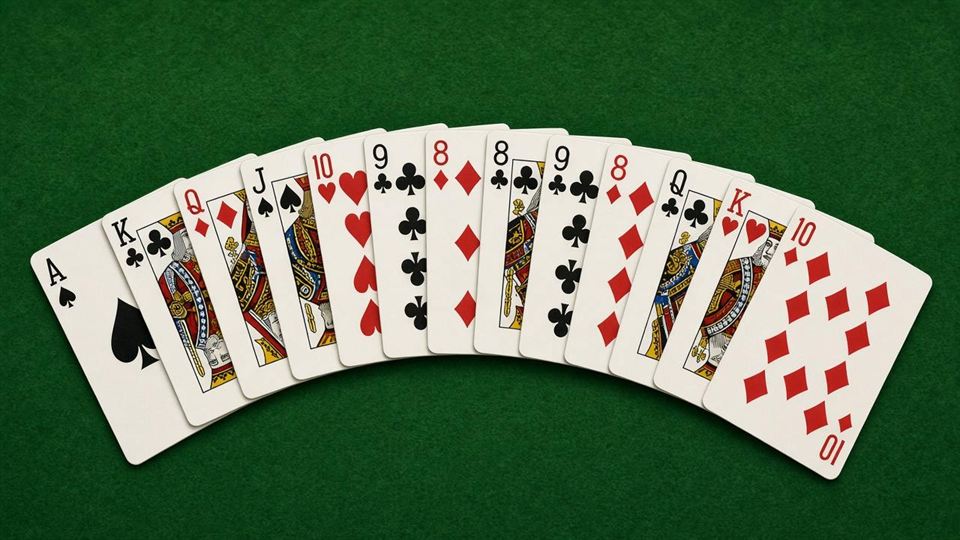
Look at your own cards first -
Set this round's trump
The person the table names sets one suit, from spades, hearts, diamonds or clubs, as this round's trump. Once it is set, the trump suit is marked on the table.
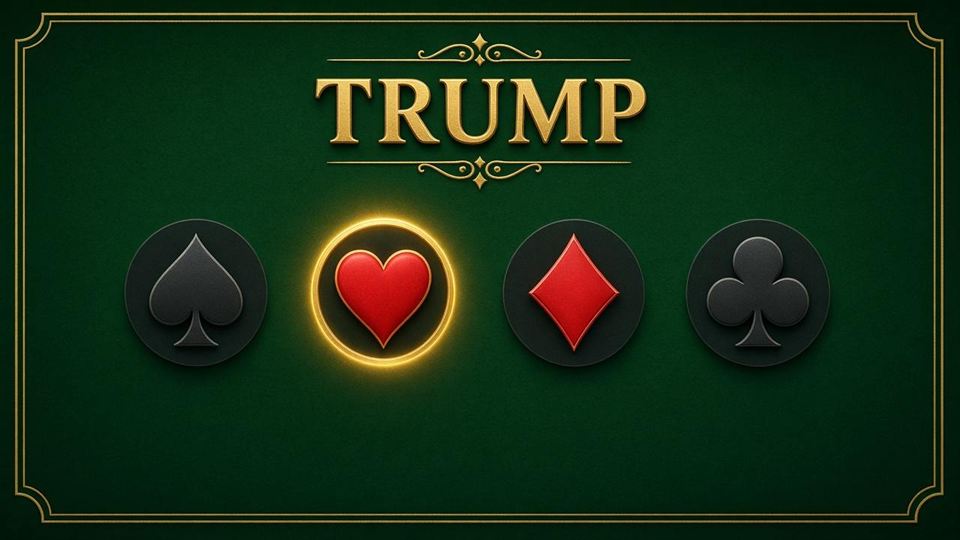
The trump is set -
Follow suit for this trick
Someone leads a card and that sets the suit for this trick. When it is your turn, if you hold that suit, you play it. When all four have played, the trick ends.
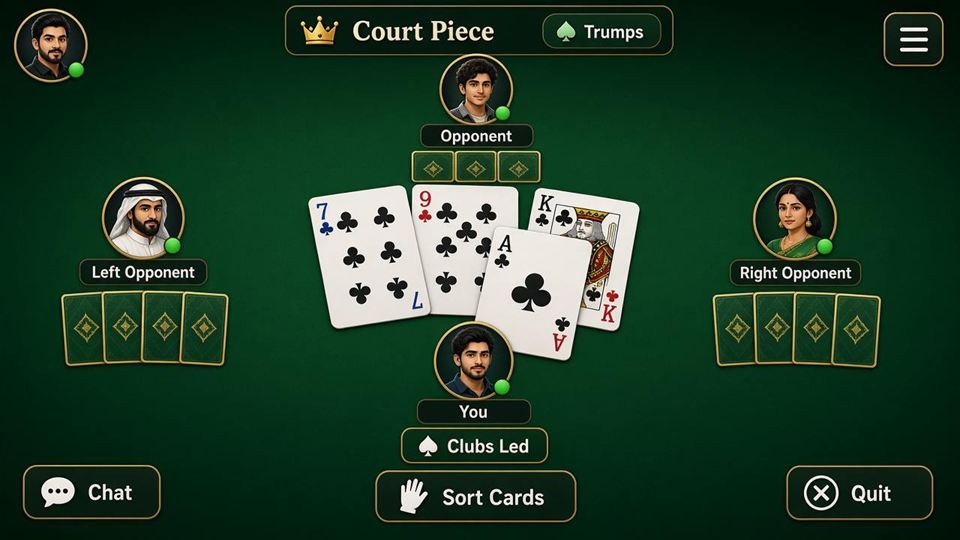
The cards in this trick -
Play a trump only if you cannot follow
Only if you do not hold the suit that was led may you play another suit or a trump. If the trick has a trump, the highest trump wins it. If it has no trump, the highest card of the suit led wins it.
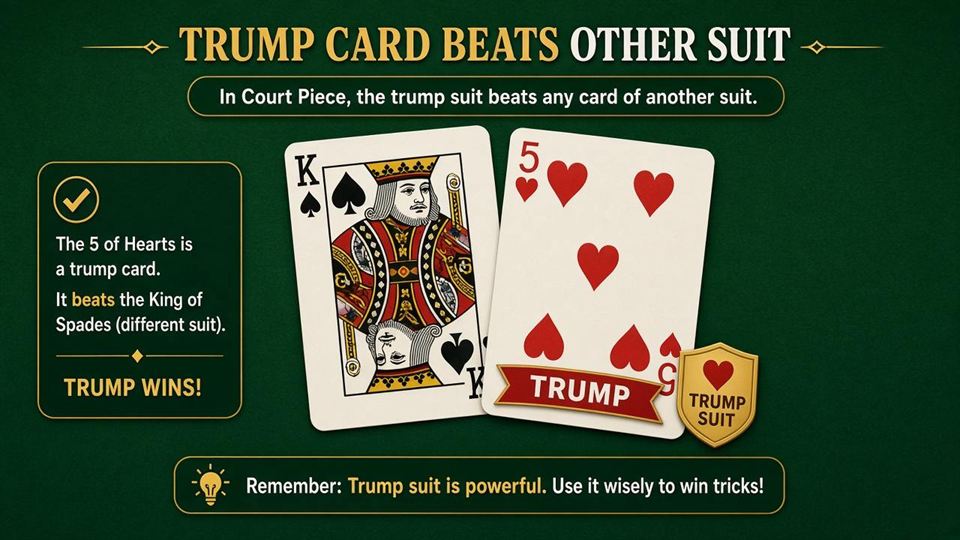
Trump beats the other suits -
Count only after thirteen tricks
When all thirteen tricks are played, add the tricks you and your partner won and compare them with the pair opposite. The difference and how it is settled are on the table. This page does not state the figures on the table.
Playing Court Piece well
What to do
- Before you set the trump, count how many cards of that suit you hold. More trumps make it easier to control tricks this round.
Count, then set the trump - When your partner can already win the trick, do not throw a trump on it. Keep the trump for a trick that matters more later.
- When you have only one or two cards of the suit led, think whether to use them now. You play a trump only when you can no longer follow.
What not to do
- Playing another suit while you still hold the suit that was led. If you hold that suit, you must follow.
Follow when you hold the suit - Playing a trump onto a trick your partner can already win. Your partner is already highest on this trick. Throwing a trump wastes it.
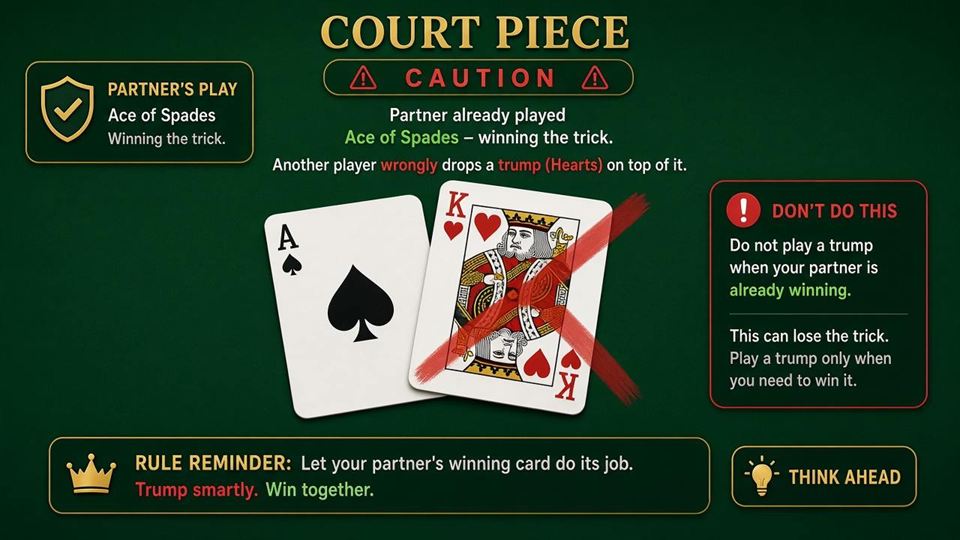
Do not smash your partner's trick - Forgetting the trump suit marked for this round. The mark is on the table. Look at it again before you play.
- Throwing away a high trump at the start for no reason. You will be one card short when a later trick matters.
Rules of Court Piece
- Numbers and partners
-
- A table has four players.
- The seat opposite is your partner, and the two pairs play against each other.
- How the seats are arranged is on the table when you enter. This page does not state it.
- Which cards
-
- One pack, fifty-two cards.
- Each player has thirteen cards.
- There is no wild card.
- Trump
-
- Each round sets one suit as trump.
- Who sets it, and how, is on the table. This page does not state it.
- The trump suit beats the other suits.
- If both cards are trump, you compare the ranks.
- Following suit
-
- The card that is led sets the suit for this trick.
- If you hold that suit, you must follow.
- Only if you do not hold it may you play another suit or a trump.
- Who wins this trick
-
- If a trump appears in the trick, the highest trump wins it.
- If there is no trump, the highest card of the suit led wins the trick.
- The player who wins the trick leads the next one.
- How it ends
-
- When thirteen tricks are played, you count the tricks each pair has won.
- How many tricks count as winning the round is on the table. This page does not state it.
- This page does not state the figures on the table.
- The stake and the settlement
-
- Whether there is a stake, and how the round is settled, is on the table. This page does not state it.
- This page does not invent figures that belong on the table.